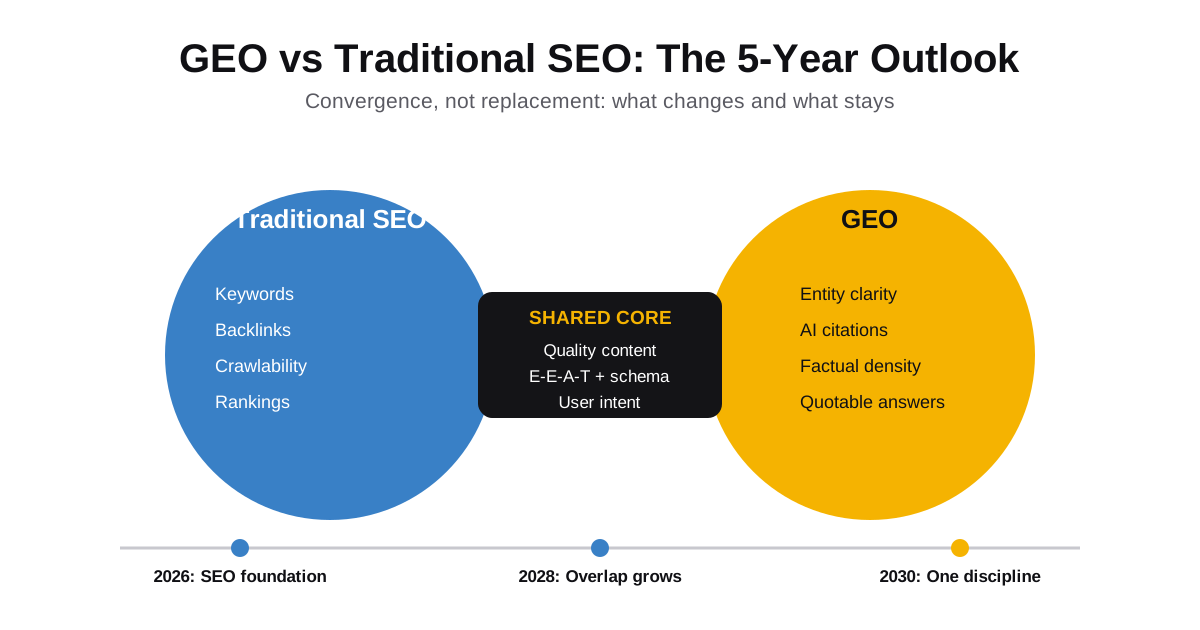
Traditional SEO Is the Ground AI Answers Stand On
AI chatbots and AI Overviews do not invent facts out of thin air. They summarize pages that search engines have already crawled and indexed. A page that is not indexed cannot be cited by an AI system, because it does not exist in the pool of sources the model draws from. Google states in its search documentation that crawlability and indexation are prerequisites for appearing in results, and the same logic applies to AI-generated summaries.
This means technical health keeps its full value: clean site architecture, XML sitemaps, fast load times, and mobile usability. Brands that neglect the basics while chasing AI visibility are building the top floor of a house with no foundation. Every GEO win starts with a page that search engines can find, render, and trust.
What GEO Adds That Classic SEO Never Had to Cover
Traditional SEO optimizes for a ranked list of links. GEO optimizes for being quoted inside a single synthesized answer. That shift changes the writing. Content needs direct, quotable statements early in each section, because AI systems lift concise, factual sentences into their answers. It needs clear entities, so a brand, product, or place name is never ambiguous. Factual density matters: pages packed with specific, verifiable details get cited more often than vague marketing copy.
Natural language queries matter too. People ask AI tools full questions, not two-word keywords, so content that mirrors real question phrasing has an edge. None of this replaces classic SEO. It is a clarity and formatting layer on top of it, and our AEO and GEO service treats it exactly that way: foundations first, answer-ready formatting second.
The Practices That Already Serve Both Masters
Here is the good news. Much of what honest SEO already demands also improves AI visibility. According to Google's guidance on helpful content, pages written for people outperform pages written for algorithms, and AI systems trained on the open web inherit the same preference.
- Original, first-person content earns rankings in classic search and citations in AI answers.
- Schema markup powers rich results and helps AI systems parse facts correctly.
- E-E-A-T signals build trust with search engines and with the models choosing which sources to quote.
- Internal linking improves crawl depth and helps AI map the relationships between your pages.
Investing in either discipline compounds in the other. There is no separate internet for AI; there is one web, and the same quality signals travel across it.
What Changes Most Between Now and 2030
Three shifts are already visible. First, zero-click behavior grows: more queries end inside an AI answer with no site visit. Second, brand mentions start acting like links. Being named by an AI system drives awareness and branded searches even when no click follows, which makes consistent, accurate business listings more valuable, since AI models cross-check facts across the web. Third, conversational and voice queries take a bigger share, which rewards question-shaped content.
Measurement changes as well. Impressions and citation frequency join rankings and clicks as core KPIs. The pace will vary by industry and by how quickly each AI platform changes its retrieval sources, so treat forecasts as direction, not destiny.
What Stays Unchanged No Matter How Search Evolves
Authority still compounds. Backlinks remain the strongest public signal that independent sites trust you, and AI systems weight the sources they cite partly by that same authority. Technical excellence never goes out of style: page speed, mobile usability, and security affect both crawlers and the trust models behind AI answers.
Original data and first-person experience stay scarce and valuable. AI can summarize, but it cannot invent your proprietary research, your test results, or your years in the field. And search engines still monetize attention, so the classic results page is not disappearing within five years. The foundation spend never drops to zero.
How to Split Your Budget in 2026: A Practical Ratio
For most businesses, a workable starting point: keep roughly 70 percent of effort on traditional SEO fundamentals (technical health, content depth, links) and put about 30 percent into GEO-specific work (quotable summaries, entity clarity, FAQ and schema coverage, tracking AI citations). New sites should lean heavier on foundations. Brands that already rank well can push the GEO share higher.
Revisit the split yearly. The ratio will likely drift toward GEO as AI answer share grows, but convergence means one coordinated plan, not two competing ones.